
The Story You've Outgrown: James Cooper
What if the story that got you here is the one holding you back? Clinton Douglas IV sits down with James Cooper, documentary filmmaker, story strategist and founder of Story Architect, who grew up on his father's Hollywood sound stages and now helps successful founders and leaders find the next chapter of their story.
Episode 1 · 46 minutes · Recorded on Zoom, 16 October 2026 · Hosted by Clinton Douglas IV · Edited by Vasrue
Who is James Cooper?
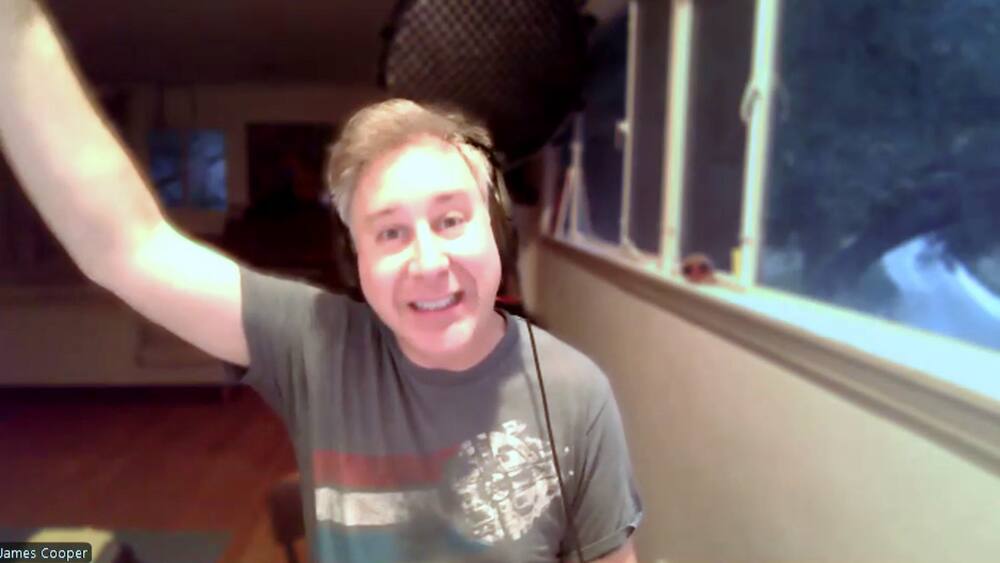
James Cooper is a documentary filmmaker, story strategist and the founder of Story Architect. He grew up in Hollywood and lives in Northeast Los Angeles.
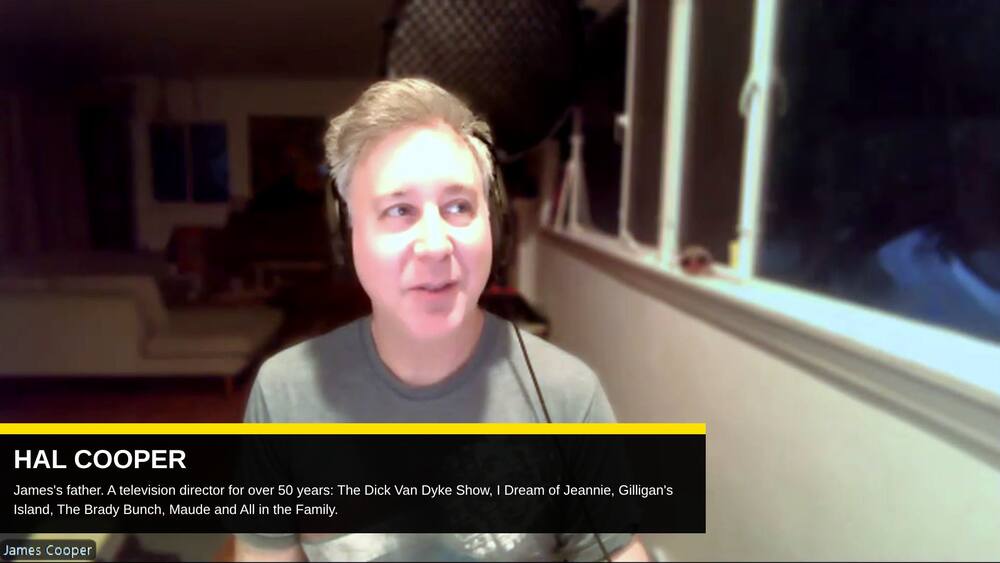
His father, Hal Cooper, directed television for more than 50 years, with credits that include The Dick Van Dyke Show, I Dream of Jeannie, The Brady Bunch, Maude, Gilligan's Island and All in the Family. James spent his childhood on those sound stages. He never went to film school; the set was his education.
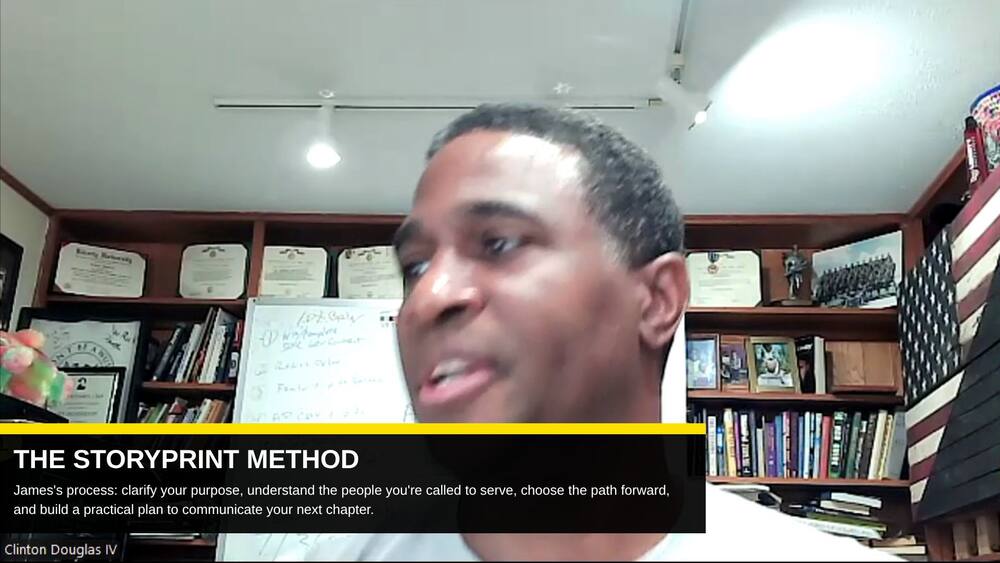
Today he works with successful founders, leaders and experts at a turning point, people whose story no longer fits who they are becoming. His process is the Storyprint method: clarify your purpose, understand the people you're called to serve, choose the path forward, and build a practical plan to communicate your next chapter.
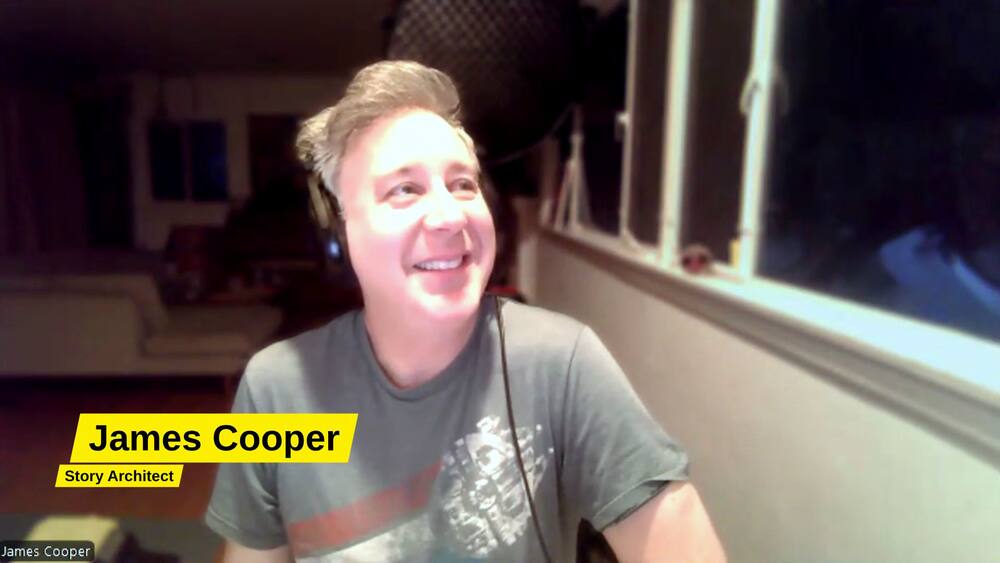
“The story that brought you this far may not be the story that takes you where you're going next.”
James Cooper's belief, as read on air
What we talked about
The conversation runs from a childhood on Hollywood sound stages, to the storytelling his father taught him, to how AI hit his video business, to the work he does now. It ends with practical advice for small businesses and one book.
- Communication is individual. Hal Cooper never directed two actors the same way. The lesson James took from it: know your audience, because what works on one person won't land the same way on the next.
- Storytelling 101: conflict and desire. Every story needs both. “Conflict and desire is like the wind meeting the water.” Luke Skywalker stuck on the farm is relatable to anyone stuck in a job they hate.
- AI, the extras and the pivot. Background actors can be generated now, and clients started editing in-house with AI. James moved up to the higher need: the message and the story, not just the edit.
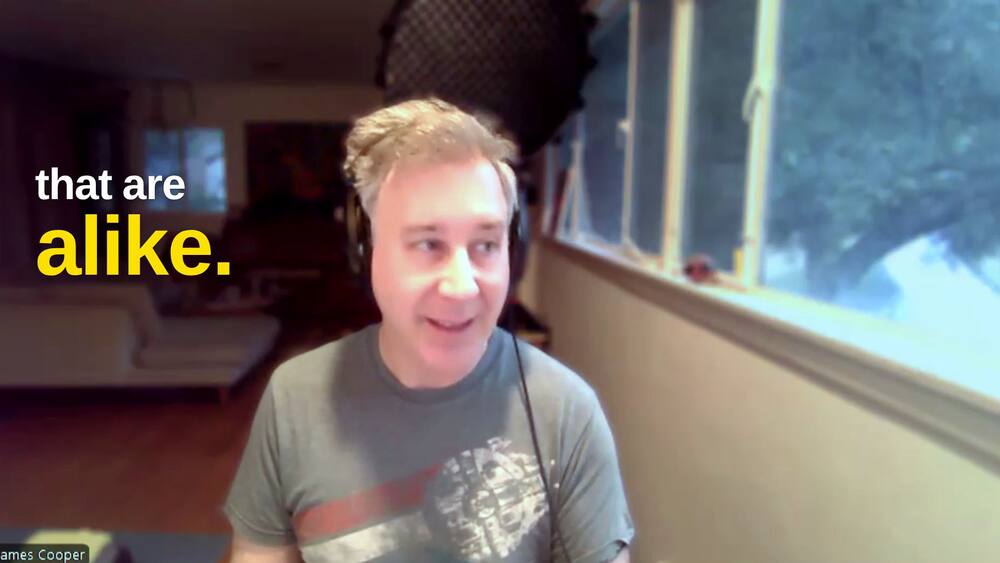
- The Storyprint. “Your story is like your fingerprint. There are no two that are alike.” Purpose, people, path and plan.
- The ideal client. Successful founders and leaders who take coaching and act on it. “What got you to $1 million is not going to get you to 2 million.”
- “Is this it? Is this all there is?” The question people ask at the top. “I love to be standing on that mountaintop waiting for them. It's like, great, you're here, now what?”
- Rebrand or rebuild? Don't tear it all down; New Coke is the warning. Smart leaders keep advisors who will name the pitfalls.
- Mental popcorn. One question pops an idea, which pops the next question. Use your audience's words, not jargon.
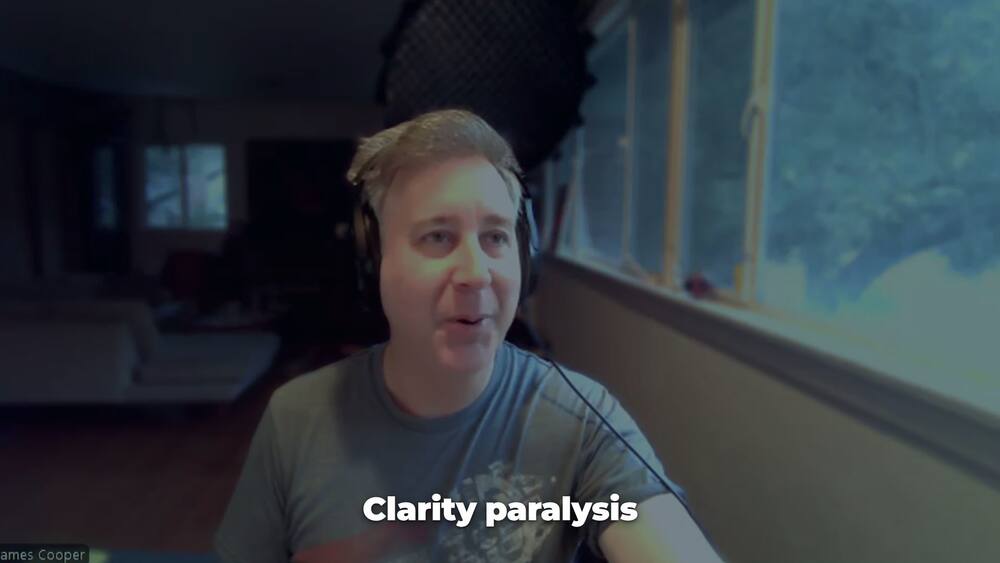
- Clarity, not clarity paralysis. Put five fishing poles in the water, test your messages, and know that the messy stuff wins.
- Using AI without the paralysis. AI gives you as many versions of a message for as many audiences as you want, fast. Ask it to interview you first.
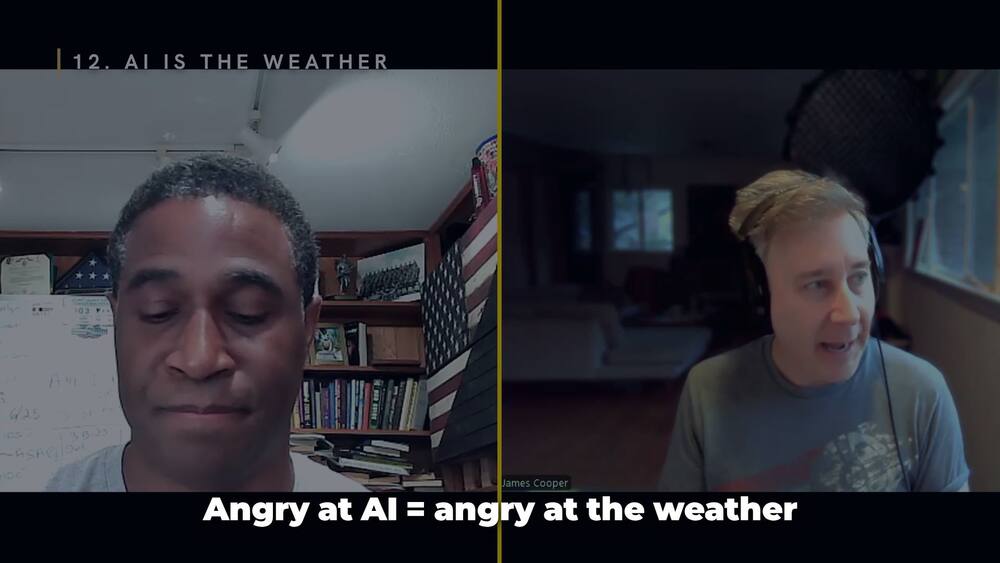
- AI is the weather. “Getting angry with AI is kind of like getting angry at the weather.” The tools are there: “You just need to have the courage to use it.”
- The book: Start With Why by Simon Sinek. “Most people start with what they do. You need to start with why you do.”
From the episode
Chapters
- Your story is your fingerprint
- Meet James Cooper
- Growing up on a soundstage
- Lessons from Hal Cooper
- Storytelling 101: conflict and desire
- AI, the extras, and the pivot
- The Storyprint
- Who is the ideal client?
- People of success: “Is this it?”
- Rebrand or rebuild? New Coke
- Mental popcorn
- Clarity, not clarity paralysis
- Using AI without the paralysis
- AI is the weather
- Start With Why
How Vasrue made the episode
The conversation was recorded on Zoom in two parts (25:31 and 20:17). Vasrue turned them into one 46-minute film that hooks the viewer first and then lets the conversation breathe.
- Transcript first. Both recordings were transcribed with speaker labels, so every cut, caption and chapter could be placed from the words, not by scrubbing.
- A 41-second cold open. Eleven of James's strongest lines, cut into one short story, with kinetic captions and the keyword in yellow. Then a black title card: The Story You've Outgrown.
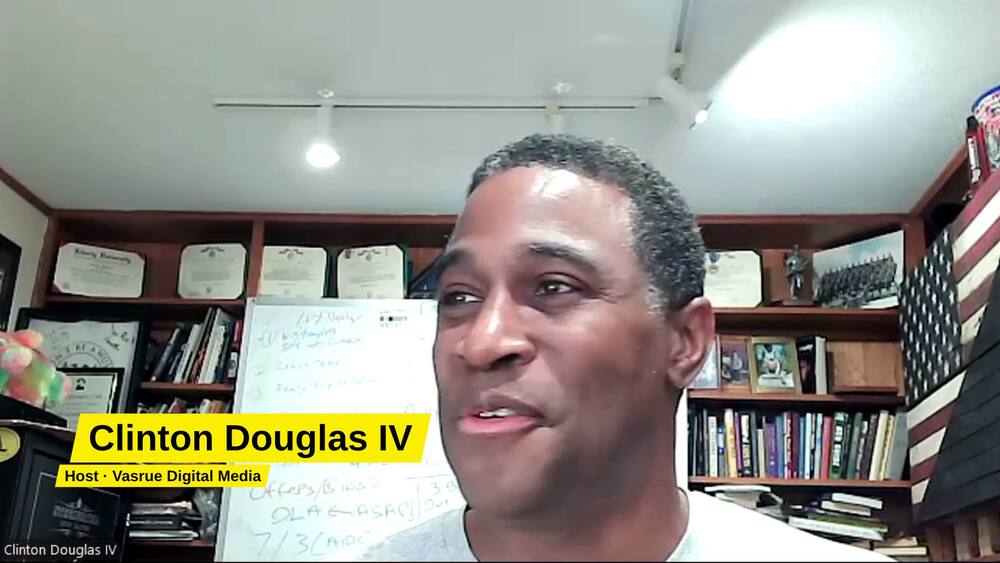
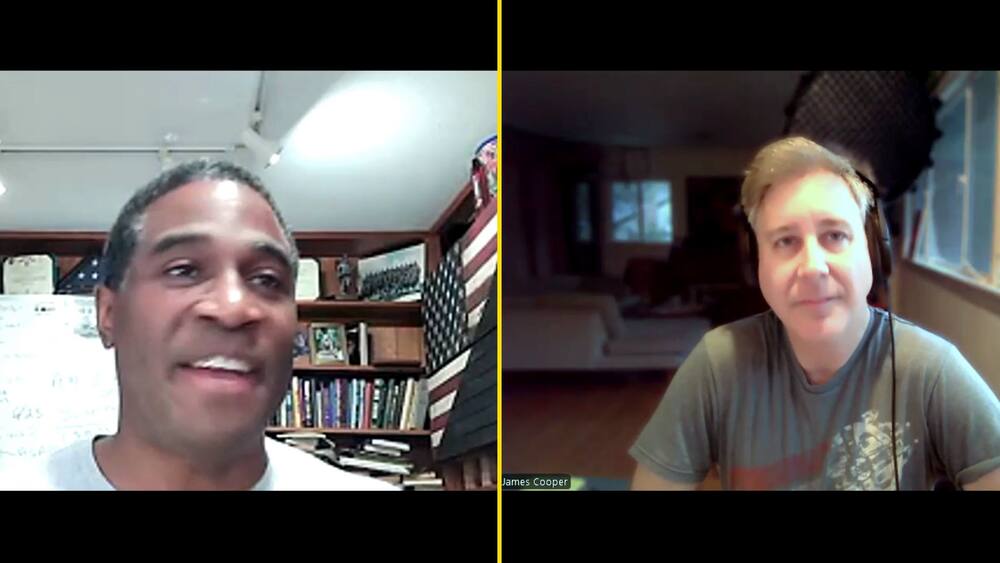
- Structure on screen. Name tags for host and guest, term cards for Hal Cooper and the Storyprint method (text taken only from the recording and James's bio), 15 chapters and captions on the key lines.
- Color correction per person. James's webcam ran red-orange in part one and red-magenta in part two. His picture was balanced moment by moment against a white window trim and his skin tone, on every full-frame shot and on his half of every two-window shot, while the host's picture stayed untouched.
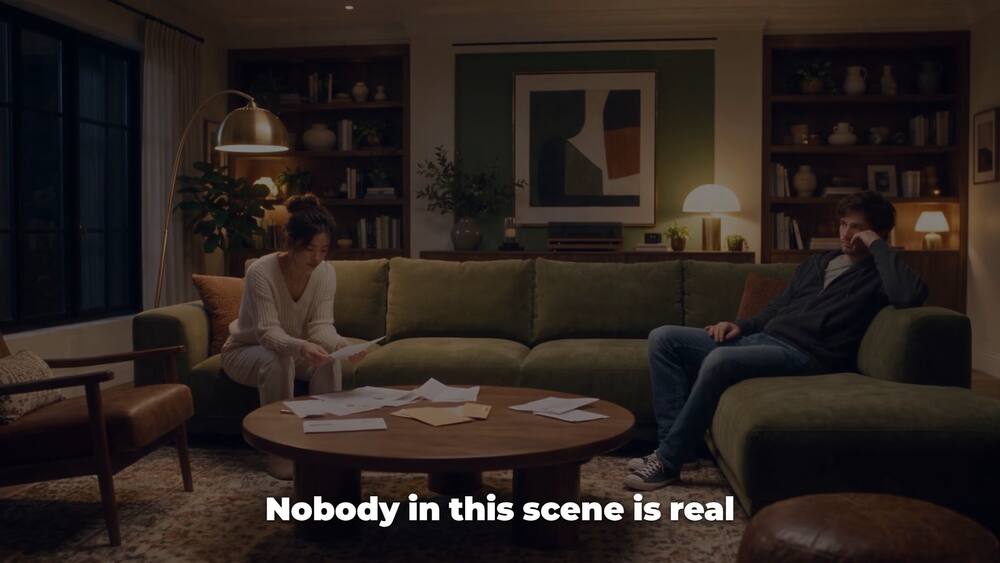
- B-roll with honesty. Short, muted clips of Hal Cooper's shows play under the moments James talks about them, for commentary. The AI-generated couple scenes play under James's own point that “the extras can be AI now” and are captioned “Nobody in this scene is real.”
- Mastered for YouTube. Loudness at −16 LUFS so it plays level with other videos, music under the cold open and the welcome only, rendered in the cloud at 1080p.
Vasrue's own production, hosted by Clinton Douglas IV. James Cooper appears as the guest. Editing was AI-assisted (transcription, caption placement, color measurement and cloud rendering), with the creative decisions made by the editor. Some scenes in the episode are AI-generated illustrations and are labelled on screen. Brief, muted clips of Hal Cooper's television work appear in the episode for commentary; all rights belong to their owners, none of those frames are shown on this page, and the episode is not affiliated with those shows. Music: “HipHop” by Dmitrii Spis (NastelBom) from Pixabay, Pixabay Content License.
Podcast editing, interview editing, cold-open writing, kinetic captions, chapter design, name tags and term cards, per-speaker color correction, B-roll, audio mastering, transcript-based editing.
Watch the full episode on YouTube →
All podcast episodes →
How we make videos →
Back to the portfolio →
Have a story worth a long-form episode?
Vasrue edits interviews, podcasts and conversations into films people watch to the end: a strong open, clear chapters and a clean picture.