
The Camino — Why They Walk
Less than 24 hours before this film existed, its maker could not spell “Camino de Santiago.” A late-night conversation with a stranger became a question, the question became research, and the research became Vasrue’s first documentary: a 4:35 story built from seven creators’ footage, 14 real pilgrim voices, and an AI-assisted editing workflow — finished on September 24, 2026, and asking one thing: why would someone walk hundreds of miles to reach one place?
Project type: self-directed documentary editing and story development · Vasrue’s role: creative director, documentary editor, and story producer · Source: publicly available Camino videos from seven creators (credited below) · Made with: an AI-assisted workflow — transcription, AI narration, cloud rendering, automated QC — with every creative decision made by a human editor
Watch “The Camino — Why They Walk” on YouTube → · Runtime 4:35 · 1920×1080, 30 fps
It started with a conversation
This project did not begin as a client assignment, a planned documentary, or an idea that had been sitting in a notebook for months. It began during an Uber ride.
Vasrue’s founder runs a government contracting business as his primary work — supporting U.S. manufacturers that build items for federal customers. That business has a long cash cycle: the product gets built, inspected, shipped, accepted, and only then paid. During the stretches between those milestones he sometimes drives rideshare at night. Not to build a career at it — he is a 100% disabled veteran who does not work a traditional full-time job — but because it keeps money moving for his family while the main business works through its cycle.
On the night of September 23, 2026, at around 11:00 p.m., he picked up a woman visiting from Los Angeles. What started as an ordinary rideshare conversation turned into a conversation about life, travel, and an experience he had never heard of: the Camino de Santiago. She had walked it for roughly two weeks. She described the beauty of the route, the people she met, the physical toll, and what it had meant to her. He was fascinated — and could not even spell it. So he handed her his phone and asked her to type it in, because he knew he wanted to look it up later.
That small moment was the beginning of this documentary.
Curiosity became a creative challenge
The next day, September 24, the research started for no reason other than wanting to understand. Why would someone voluntarily walk hundreds of miles across Spain or Portugal toward Santiago de Compostela? Why do people talk about it with so much emotion? How does a walking route become a life story?
Somewhere in that research, the question changed. Vasrue already had the tools to do more than watch: an AI-assisted content workflow, transcription and editing tools, cloud rendering, and the practice of shaping footage into a narrative. So instead of only watching documentaries about the Camino, we would make one.
Why would someone walk hundreds of miles to reach one place?
That is the question the finished film is built around. It is the first documentary Vasrue has ever produced, and it went from idea to release cut in under a day.
Seven separate productions, one story
The film was never going to be a highlight reel or a collection of pretty travel clips. The creative goal was a documentary that feels like one story, even though the raw material came from seven different creators with different cameras, voices, frame rates, editing styles, locations, and personal experiences.
The sources were UTracksTravel, natty b, Nadine Walks, Salon, Tanja Vanessa, Tammy Kraft, and Liam Brown. Between them the footage held coastal scenery, rain, hostels, pilgrim credentials, Camino markers, spiritual reflection, injury, friendship, food, sunrise, and the arrival in Santiago. Their willingness to document and share their own Camino experiences is what made it possible to study the journey from several perspectives at once — and each of them is credited in the film and below.
Every source was transcribed word for word. The footage was shot-logged so that cuts begin and end inside real shots instead of accidentally crossing a hidden edit in someone else’s video. Interview lines were chosen because they advanced the story, not because they sounded good on their own. B-roll was chosen for emotional purpose and narrative function.
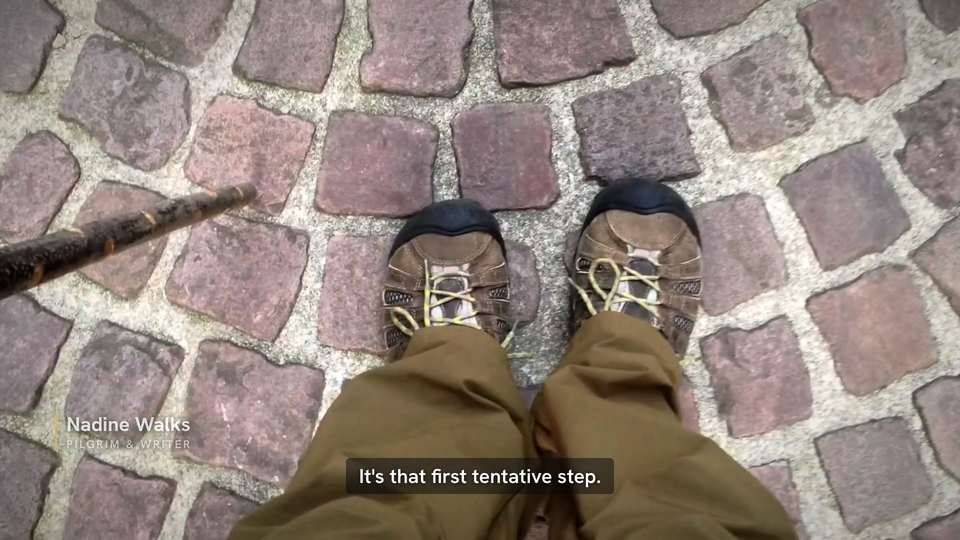
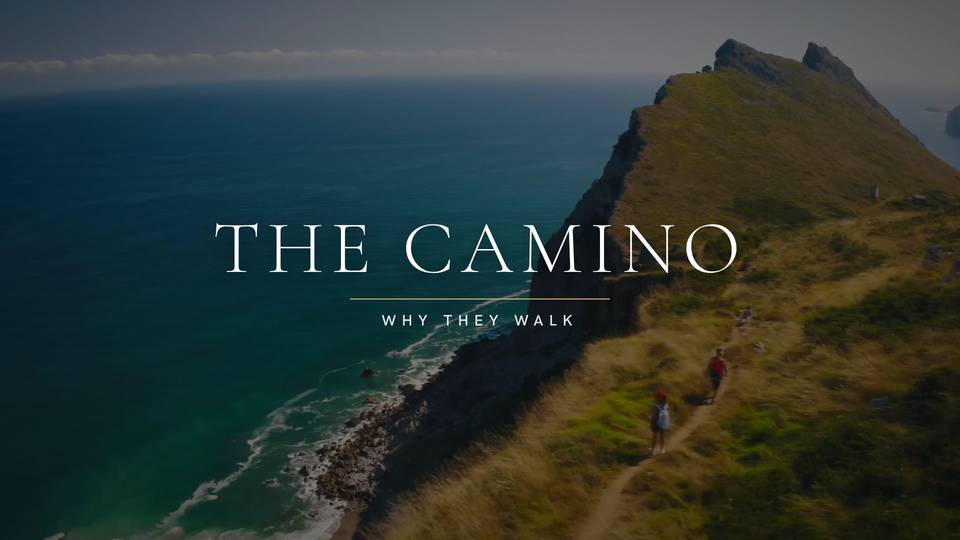
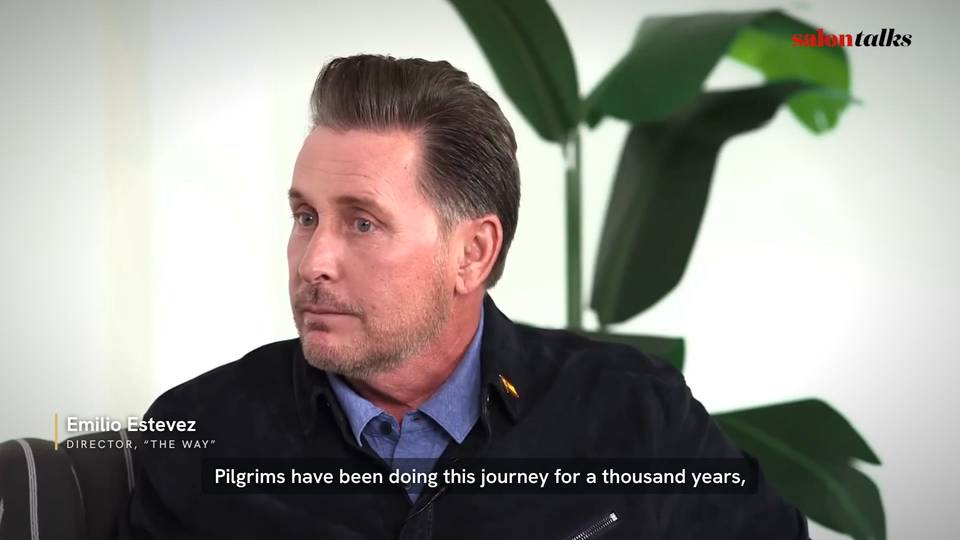
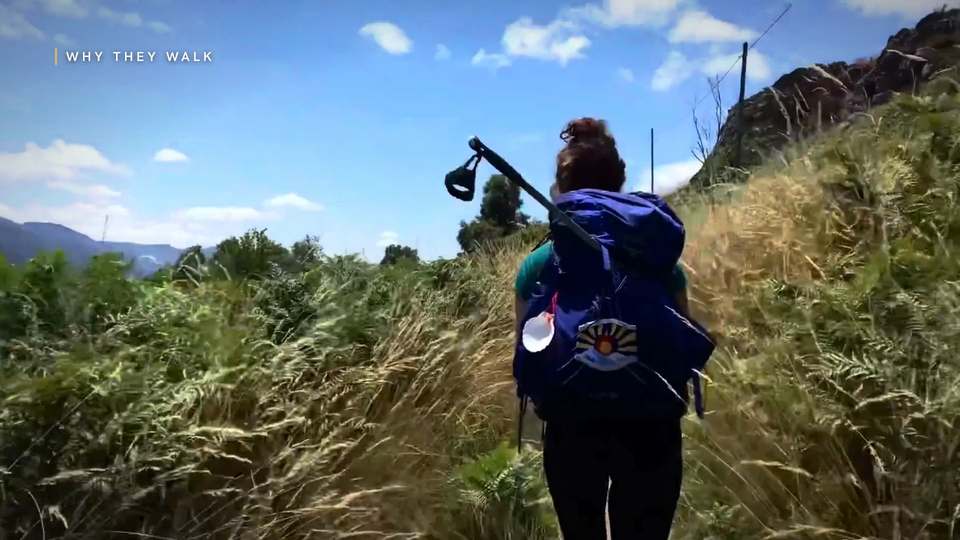
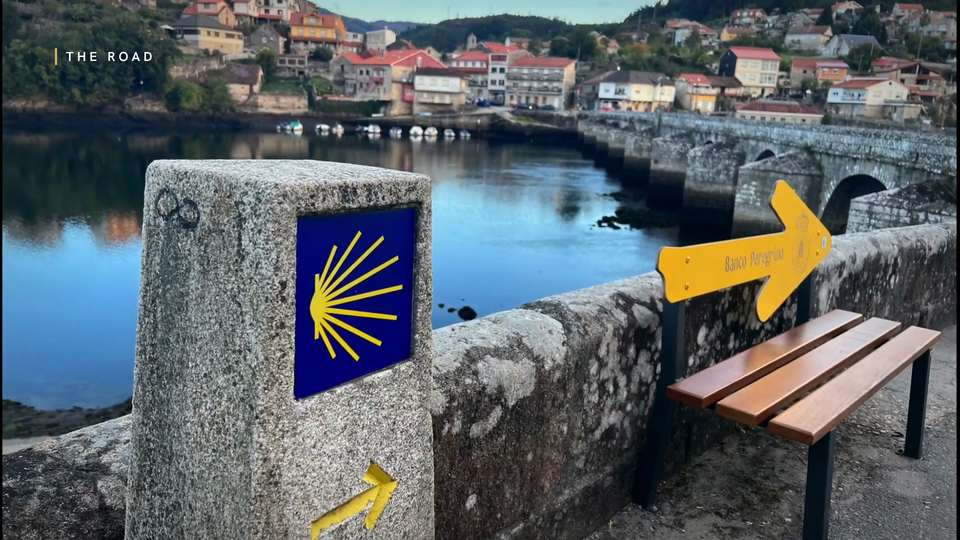
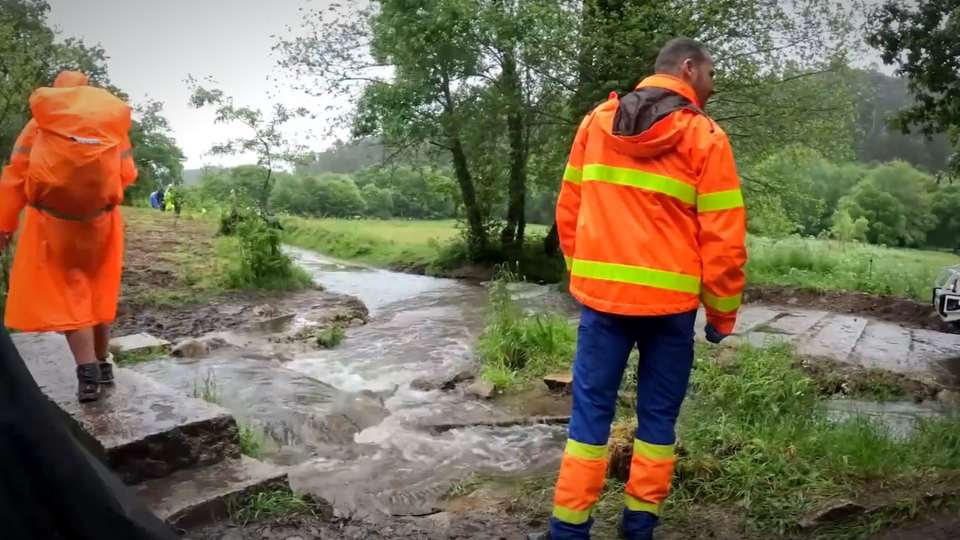
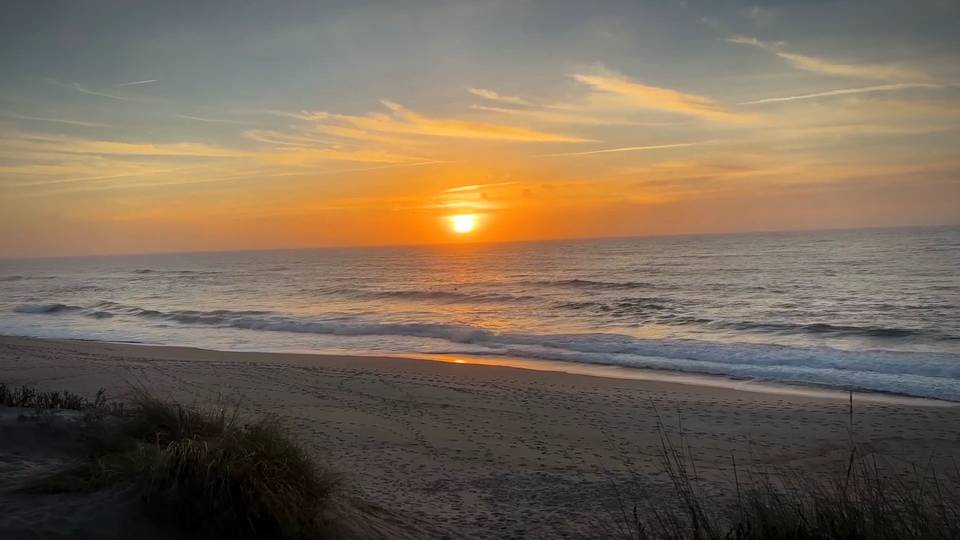
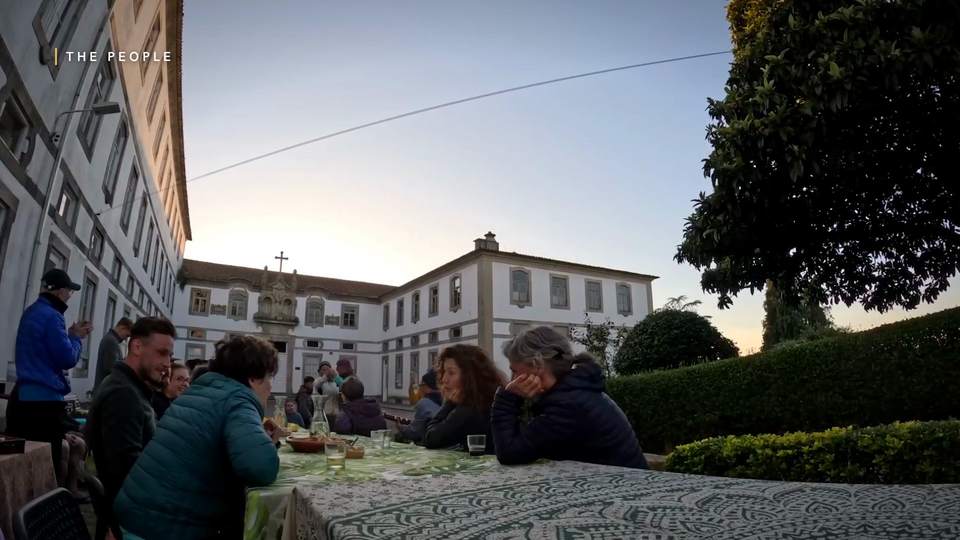
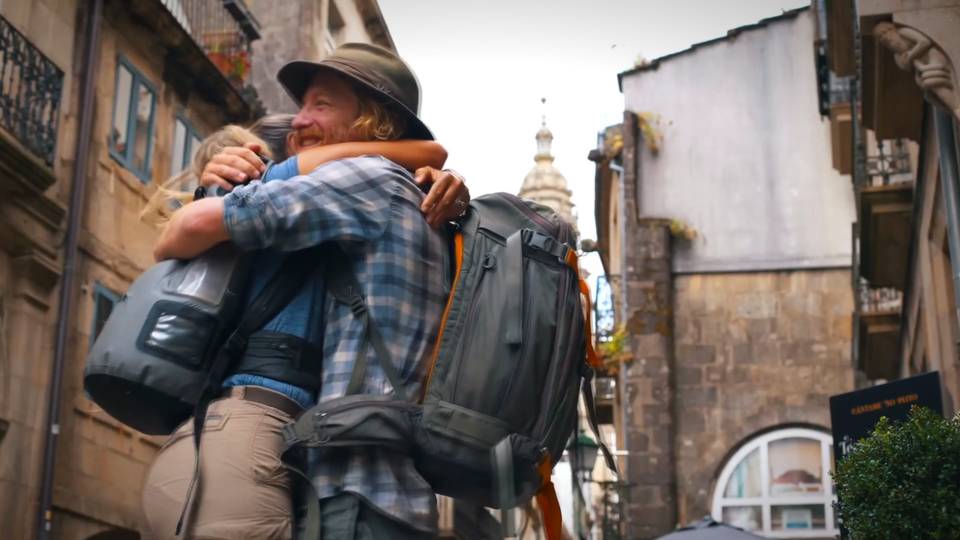
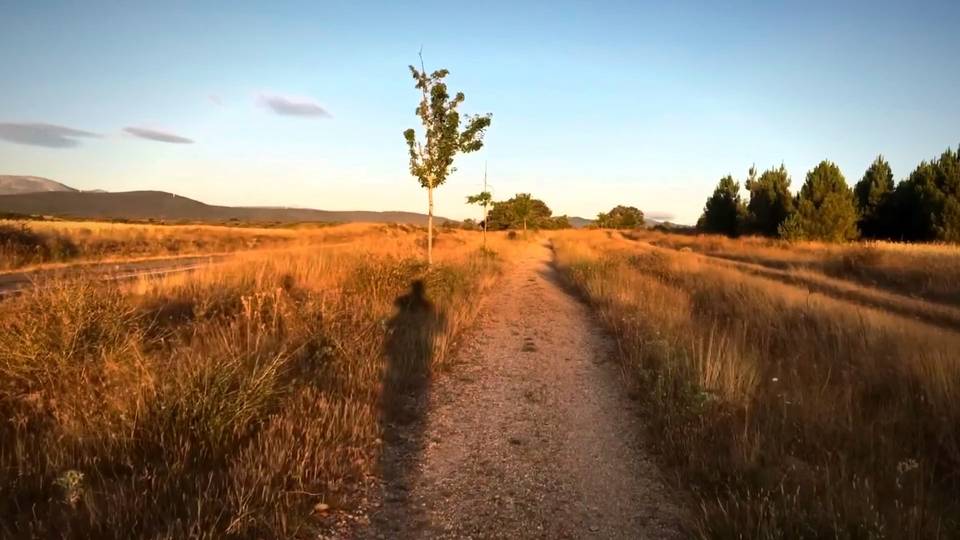
Ten full frames from the release cut, in story order. All footage is third-party and credited to its creator; see the source credits below.
Building the documentary arc
The film is organized by story, not by source. It opens quietly, with a question about what makes the Camino more than a walk, then moves through five chapters and a close.
- History and the routes Where the Camino came from, and the network of paths that all lead toward Santiago de Compostela.
- Why they walk Some come for faith. Some for adventure. Some because they are carrying questions they cannot quite answer. Whatever the reason, everyone eventually has to do the same thing: put one foot in front of the other and keep moving.
- The road The backpack, the yellow arrows and the scallop shell, pilgrim credentials, shared hostels, long paths, and the daily routine.
- The struggle Rain. Feet that hurt. Shoulders that hurt. A pilgrim twists an ankle. The film stops romanticizing the journey and admits what it costs.
- The people, and Santiago Hardship turns into adaptation, simplicity, and companionship — strangers become part of the experience. Then the last kilometers, the cathedral, the celebration, the emotional arrival, and the idea that the journey does not end when the walking stops.
The closing thought became the heart of the film: the Camino is not only about where the road ends. It is about who a person becomes while walking it.
Made leveraging AI — and how, exactly
We want to be plain about this: this documentary was created leveraging AI, and it could not have gone from a conversation to a finished film in under 24 hours without it. We also want to be plain about where the AI stopped and the editor started.
Where AI did the work
- Transcription. Every one of the seven sources was transcribed word for word, which is what made it possible to search, select, and cut from real spoken lines instead of scrubbing hours of video.
- Narration. The narrator is an AI voice — “Kaia,” through Seed Audio. The first attempt used a male voice; the film needed a female narrator, so several voices were auditioned, a first cut was made with one, and Kaia was selected for the release. The narration runs in 12 blocks and carries the context, the history, the transitions, and the film’s thesis.
- Post-production and QC. Frame-rate correction, dialogue cleanup, loudness normalization, music ducking automated from the voice timing, cloud rendering on AWS Lambda, and automated checks for lip-sync, freezes, and judder.
Where the editor did the work
Every creative decision was human: which of the 14 real pilgrim and interview lines earned a place, which B-roll carried the emotion, when narration should speak and when it should get out of the way, when music leads and when it disappears, when a shot moves quickly and when the viewer needs time to sit inside a moment. The real voices were treated with a rule: each excerpt is either shown with the speaker at the exact moment the words were spoken, or intentionally covered with B-roll. The film never fakes synchronization by putting someone’s face from a different moment under their voice.
The tools assist the workflow. The story comes from the editor. That is the same way Vasrue approaches every AI-assisted project.
Music and sound design
Four tracks from Pixabay were arranged in a deliberate order to follow the film’s emotional progression. The first introduces the Camino and its history. The second carries “why they walk,” the road, the struggle, and the beginning of transformation. The third moves into people, community, and the final kilometers. The fourth carries Santiago, the conclusion, and the credits.
The tracks were leveled before they were placed, crossfaded between chapters, and automatically ducked whenever a voice is present, so the music can open up under visual moments and drop back beneath narration and interviews. The final master measures -16.0 LUFS integrated with a -2.2 dBTP peak.
The first cut taught us what the second cut needed
Version one proved the documentary could work. It also exposed the problems. Some source footage stuttered when converted to the 30 fps timeline. Several shots changed too quickly. A few interview visuals showed the right speaker but not the exact moment the words were spoken. Near the ending, the music rose too far under an important line. And the first version used a soundtrack that did not match the music chosen for the project.
Every one of those issues became a reason to improve the film. For version two, the opening was slowed from six cuts in 15 seconds to three longer shots. The median shot length went from 2.6 seconds to 4.2. Frame-rate conversion was corrected. Every interview excerpt was rebuilt as one continuous piece and checked against the original picture. Music ducking was automated from the voice timing instead of drawn by hand.
The result was a longer, calmer, more deliberate film. All 14 interview lines passed the lip-sync gate at a 0.000-second offset. The judder check found zero cuts with periodic repeated-frame stutter. Every one of the 49 cuts was checked at its first, middle, and last frame before the final render.
Production snapshot
| Final runtime | 4:35 total — about 4:20 of film plus 15 seconds of credits |
|---|---|
| Source productions | 7 YouTube videos from 7 creators |
| Final edit | 49 cuts; median shot length 4.2 seconds |
| Interview material | 14 real pilgrim and interview lines |
| Narration | 12 AI narration blocks, Seed Audio voice “Kaia” |
| Graphics | Main title, routes card, 5 chapter cards, lower thirds, 34 subtitles |
| Music | 4 Pixabay tracks, leveled and crossfaded in a planned sequence, auto-ducked under voice |
| Delivery | 1920×1080, 16:9, 30 fps, H.264 + AAC |
| Audio master | -16.0 LUFS integrated; -2.2 dBTP peak |
| Quality control | Lip-sync gate, cut checks, freeze check, judder check, final contact-sheet review |
| Render workflow | AWS Lambda cloud render with final audio master and QC passes |
| Timeline | Conversation, Sept 23, ~11:00 p.m. → research and version 1, Sept 24 → release cut finished Sept 24, just before midnight |
What this project demonstrates
This piece is about more than cutting clips together. It meant taking unrelated footage from multiple creators and building a single narrative with an emotional beginning, middle, and end — deciding what belongs in narration and what belongs in a real person’s voice, when music should lead, when it should vanish, when a shot needs to move, and when the viewer needs to stay.
It also meant running a full technical workflow:
- Transcription-based editing
- Shot logging and interview extraction
- B-roll selection and visual pacing
- Subtitle and caption timing
- AI narration direction and voice selection
- Lower thirds, chapter cards, title graphics
- Frame-rate correction
- Dialogue cleanup and loudness normalization
- Music selection, crossfades, automatic ducking
- Cloud rendering
- Frame inspection and lip-sync validation
- Final mastering and QC
That is the value this piece is meant to communicate: Vasrue is not only trying to make footage look polished. We are trying to understand what the footage is saying, and build the edit around that story.
Why this project matters
Less than 24 hours before this film began, its maker did not know how to spell Camino de Santiago. One conversation with a stranger made him curious. Curiosity became research. Research became a creative challenge. And that challenge became a first documentary.
The project also left him wanting to walk the Camino himself one day. He started as an editor studying other people’s journeys on a screen and finished thinking about what it would mean to carry his own backpack, walk those roads, and understand the experience with no timeline or edit window between him and the path.
Good stories do not always begin with a production brief. Sometimes they begin because you listened to someone else’s story long enough to become curious about your own.
Creator appreciation and source credits
This portfolio study was built from publicly available Camino videos by seven creators. Their work is the foundation that made the editorial exercise possible, and each of them is credited in the documentary.
- UTracksTravel (@UTracksTravel) — Walking the Camino Norte in Spain — youtu.be/x-Jc3yEYoqU
- natty b (@natty_b) — Walking the Portuguese Camino de Santiago — youtu.be/51hHE9JBmCs
- Nadine Walks (@NadineWalks) — This is the Camino (Camino de Santiago in 6 minutes) — youtu.be/Fbh2_XaT0Og
- Salon (@SalonTV) — Emilio Estevez on why the Camino is special to him, Salon Talks — youtu.be/Z11Uo9SNuQs
- Tanja Vanessa (@tanjavanessa) — I Hiked the Camino Portugues Spiritual Variant… — youtu.be/fc93LluTkMQ
- Tammy Kraft (@TammyKraft) — Beginner’s Guide to the Camino Portugues — youtu.be/Xi8nGMLpkRM
- Liam Brown (@LiamBrown) — Hiking 174 Miles Along the Portuguese Coast — youtu.be/doadsWhuQxk
Music: Nikita Kondrashev, Dmitrii Kolesnikov, Sound4Stock, and Andrii Poradovskyi — all from Pixabay. Narration: AI voice “Kaia” via Seed Audio.
Project outcome
Because this was a self-directed portfolio project, no performance numbers are attached — no views, watch time, or engagement are claimed. The result is the film itself, and the demonstration behind it: story development, interview selection, narration direction, B-roll pacing, music design, and an AI-assisted post-production and QC pipeline, applied to footage that was never shot to become one film. Which is exactly the point — you do not need a production crew to get a documentary out of the footage you already have.
Portfolio disclosure: this is a self-directed documentary editing study created to demonstrate story development and AI-assisted post-production. It was not commissioned by, and is not affiliated with, any of the creators whose publicly available footage appears in it; Vasrue did not film any of the source material, and the contribution shown here is the story, the edit, and the sound. The narration is an AI voice, disclosed as such. The licence or permission status of each source video is being confirmed and documented before any commercial use of the film; the Pixabay music is credited in the film.
Documentary editing, story development, multi-source video editing, interview and dialogue editing, transcription-based editing, AI narration direction, subtitle timing, lower thirds and chapter graphics, audio cleanup and loudness normalization, music pacing and automatic ducking, frame-rate correction, lip-sync QC, cloud rendering, final mastering.
Watch the documentary → See the sports footage edit → Back to the portfolio →
Do you have a story you want to tell?
You have the footage. You have the story you want the people to hear. Let us produce that — we will edit and produce the video footage you already have and make it into a documentary. Send us what you have shot, tell us what the story is, and Vasrue will review the request.